Penumbra of Industry
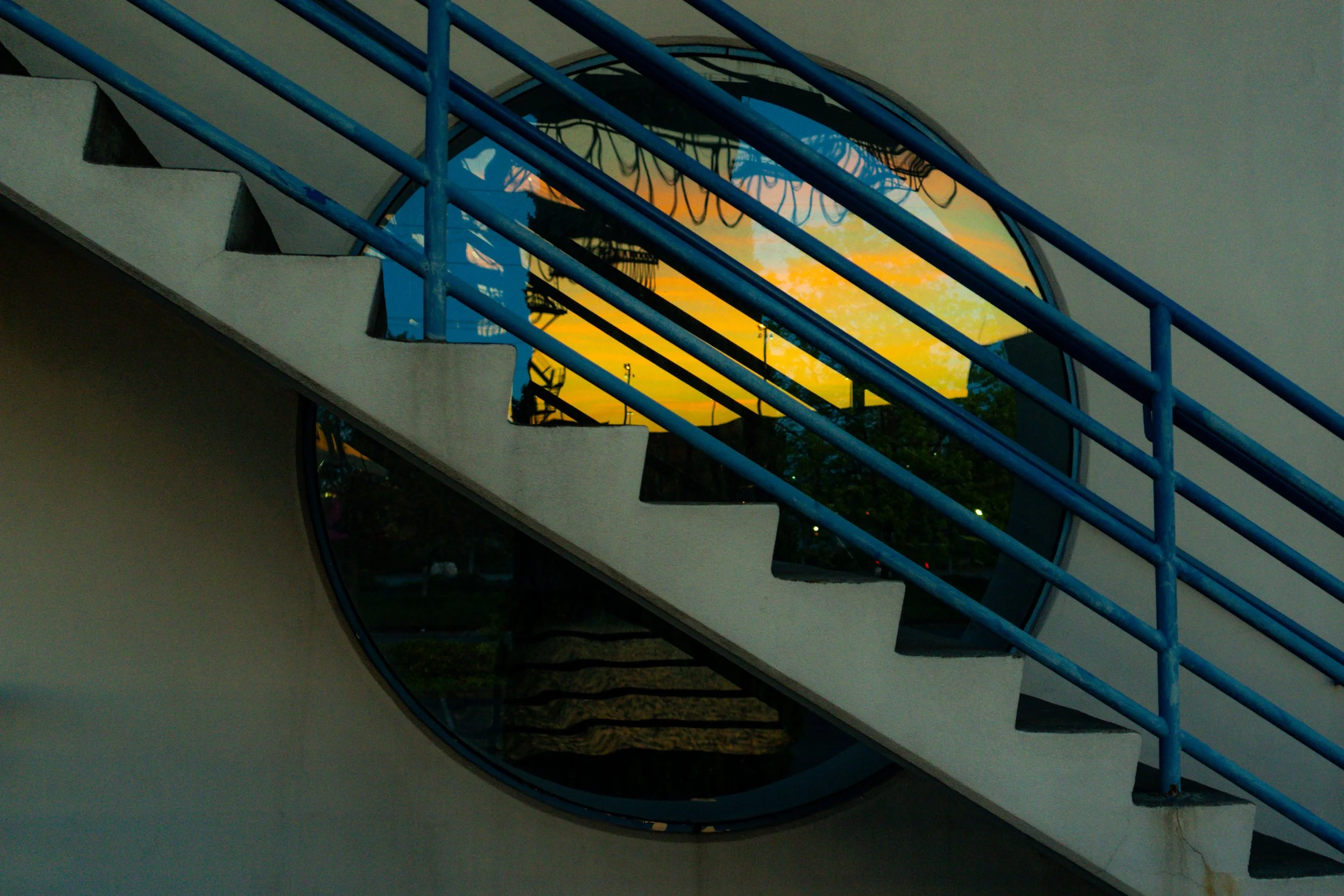
As the day winds to an end, people are still working to either load or unload this ship and keep our global supply chain in motion. Their efforts reflect from a round window of the “four-story” Public Observation Tower “overlooking Sitcum Waterway near the Port's Administration Building” (Oldham, 2008). The tower was dedicated to the “citizens of Pierce County” in November of 1988 to honor the port’s official founding on November 5, 1918 (Public Access, n.d.). The Observation Tower is a safe place to observe the goings on of the port 24 hours a day, seven days a week. The tower allows visitors to observe the port without disrupting nature or business. The tower is a solution to the lack of accessibility and transparency inherent to the nature of the business at the port. It works as a living history monument to the place where it stands while allowing a safe vantage point from which to witness the splendor of the port.
As a public port district, the Port facilities were, and are, public property, and the nearly non-stop activity of huge cranes lifting containers high into the air and giant ships gliding slowly down the waterways fascinates many members of the public. But the constant movement of cranes, trains, and equipment of all kinds make the docks unsafe for visitors to roam at will. With the Port's 70th anniversary approaching, the five elected Port Commissioners -- Robert G. Earley, Jack A. Fabulich, John McCarthy, Patrick O'Malley, and Ned Shera -- decided to recognize the citizens who established and supported the Port by creating a safe viewing location at the center of the Port's operations (Oldham, 2008).
Maintenance and public knowledge of this access point are vital to its continued use. The tower, in particular, needs a higher public profile. Many Tacomans have yet to learn that it is there and feel distant from the port's activities.
The Port of Tacoma is working “to phase out emissions from seaport-related activities by 2050 or sooner, in partnership with the Northwest Seaport Alliance” (Environment, n.d.). This area is littered with seals and ducks when the boats are gone. For decades, advancements in industry have come at the expense of the environment. We are currently in a situation where sustainability is expected. Continuing to foster these efforts is vital to broader world vitality. We must continually work to reassess what sustainability means as we approach previous goals. The goal is to far surpass anything thought of as possible when an initial sustainability goal was set. Continuing to set new metrics for sustainability, study the impacts of global trade, and work toward establishing circular, regenerative economies to support sustainable practices in the city itself will advance the sustainability of the port as a whole (Akkucuk & Ulas, 2019; Arora et al., 2023; Cooper, 2020; Kirchherr et al., 2018; Kurita et al., 2023; Neves & Marques, 2022; Solnit & Young-Lutunatabua, 2023). The hope is that the continual development of the Blair Waterway will come hand-in-hand with the regeneration of the environment and the economy (Abel, Aug 23, 2018 Updated Oct 4 2022; Bunce & Desfor, 2007; Solnit & Young-Lutunatabua, 2023; The White House, 2022). Ethical interactions in this environment promote the well-being of aquatic animals and the quality of life for everything and everyone else.
References
Abel, K. (Aug 23, 2018 Updated Oct 4 2022). NWSA, Army Corps Take First Step Toward Deepening Tacoma Harbor. South Sound Business. https://www.southsoundbiz.com/news/nwsa-army-corps-take-first-step-toward-deepening-tacoma-harbor/article_27cd797d-762a-5925-97a9-f6a7bdfac3c9.html
Environment. (n.d.). Port of Tacoma. Retrieved May 12, 2024, from https://www.portoftacoma.com/environment
Oldham, K. (2008). Port of Tacoma dedicates its Public Observation Tower on November 21, 1988. In HistoryLink.org (p. HistoryLink.org Essay 8816). HistoryLink.org. https://www.historylink.org/File/8816
Public Access. (n.d.). Port of Tacoma. Retrieved May 12, 2024, from https://www.portoftacoma.com/community/public-access
The White House. (2022). FACT SHEET: Biden-Harris Administration Announces Additional Infrastructure Funding for Ports and Waterways. The White House. https://www.whitehouse.gov/briefing-room/statements-releases/2022/03/29/fact-sheet-biden-harris-administration-announces-additional-infrastructure-funding-for-ports-and-waterways/
The Wake of Todd Yards
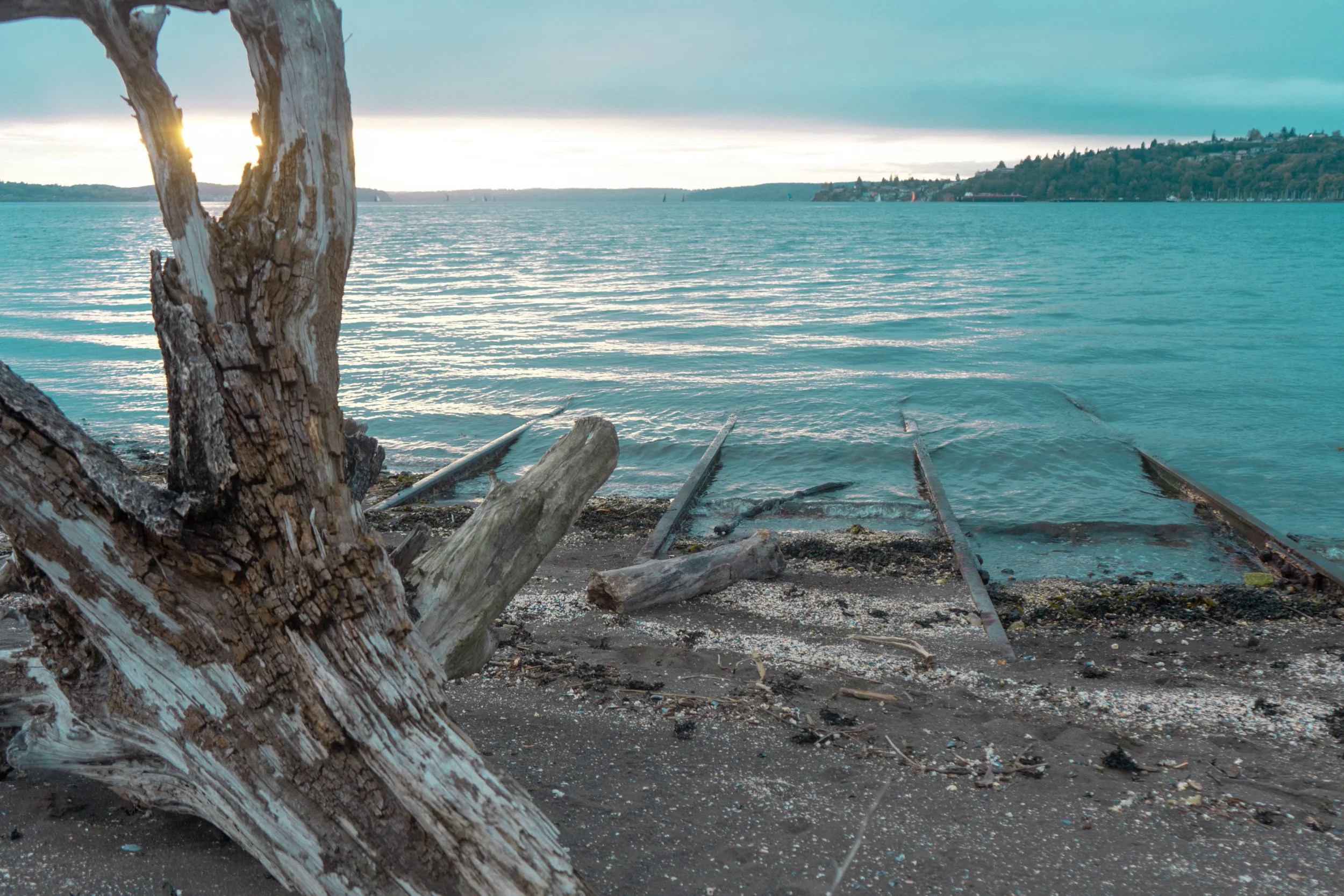
The sun setting behind the roots of a toppled tree on the beach. Tracks run from the beach into the water. From historic photos, what looks like train tracks here likely assisted with launching ships from this location (Port of Tacoma, 2021). Now a part of the Earley Business Center, this beach was vital to the shipbuilding efforts of Todd Shipyards Corporation in World War I and World War II (Port of Tacoma, 2021). Earley Business Center has more than the haunting remnants of shipbuilding activities—the soil contains metals, asbestos, solvents, and petroleum in various forms (including gasoline). Metals, solvents, and varied petroleum contaminants are also present in the groundwater at the business park (Southwest Regional Office, 2013). The contamination in the tide flats has been a hard-fought battle, but recent efforts bearing fruit inspire confidence that this site could once again positively exist in its ecological landscape (City of Tacoma, 2022; Kocher, 2024). This situation exists because of the constant push and pull of capitalism meeting the demands of war.
Currently, contamination impacts the water quality in the surrounding area and makes the beach itself unsuitable for leisure use, detracting from the overall level of access for people. The contamination is more likely to directly impact creatures like the seals that visit the beach than humans, as not many people know of its existence. There is currently no work plan for how to remediate this site, as it has not yet been 180 days from the submittal of the amended agreed order on the project, Tacoma Port Early Business Center - AO DE 9553 (Smith et al., 2023; Southwest Regional Office, 2013). They are foregoing public comment on the project and reserve the right to combine notices. The best course of action to take for this site will be revealed after environmental testing is conducted.
The business center is a maritime-centric business incubator the port manages (Port of Tacoma, 2021). Though the temporary use should not logically further the negative impacts on the site, Trident has experienced two ship fires—one required nearby communities to shelter in place, and the other resulted in a 20-30 gallon oil spill with a corresponding $25,000 fine (The Maritime Executive, 2023). The interim use of the site provides income for people through the variety of companies located there, which positively impacts the community and turns a negative into an opportunity. On the other hand, the continued contamination of the site and surrounding community implies that there may not be an ideal path toward remediation that retains jobs and values our reciprocal ecologies. The remediation process will not be easy, but doing more to encourage and support these businesses to follow the regulations already in place would do a lot to bolster confidence in the concept of a healthy balance.
References
City of Tacoma. (2022). Thea Foss Waterway Cleanup. City of Tacoma. https://www.cityoftacoma.org/government/city_departments/environmentalservices/surface_water/thea_foss_waterway_cleanup
Kocher, J. (2024, April 12). Melanie’s Park opens on Thea Foss Waterway with elaborate play areas and scenic views. Metro Parks Tacoma. https://www.metroparkstacoma.org/melanies-park-opens/
Port of Tacoma. (2021, May 27). Tacoma Tideflats’ important role in World War II shipbuilding. Port of Tacoma. https://www.portoftacoma.com/news/tacoma-tideflats-important-role-world-war-ii-shipbuilding
Southwest Regional Office. (2013). Tacoma Port Earley Business Center. Washington State Department of Ecology. https://apps.ecology.wa.gov/cleanupsearch/site/2395
The Maritime Executive. (2023, April 9). Trident Seafoods Factory Trawler Catches Fire in Tacoma. The Maritime Executive. https://maritime-executive.com/article/trident-seafoods-factory-trawler-catches-fire-in-tacoma
Purgatory
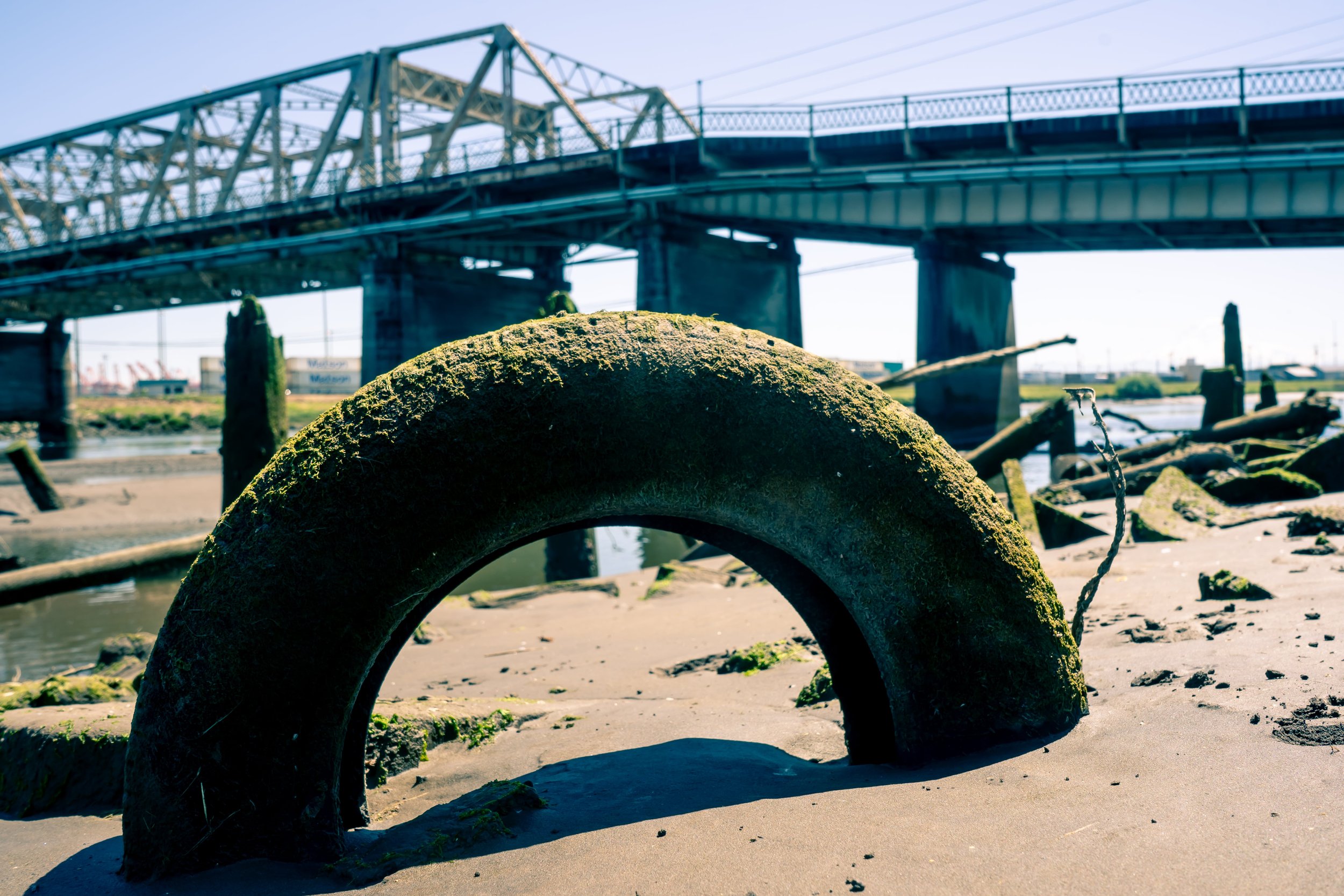
A tire sticking out of the sand in front of the East 11th Street Bridge. If you ask their security guard, the tire and this beach are considered property of WestRock, a defunct paper mill, but are actually just outside of their parcel on Pierce County Parcel Viewer. The bridge was constructed in 1912, and the viaduct followed at some point in the 1930s. The bridge was originally a vertical lift bridge, like the Murray Morgan Bridge, with a trolley line before being “converted to a fixed span in 1979” (Sailor, 2022). The paper mill was built in 1928 by the Union Bag Company, who never saw it in operation before its sale to St. Regis Paper Company. Under St. Regis, the mill was fully operational by 1935. St. Regis sold the mill to Champion Paper in 1984, who sold it to Simpson Paper Company in 1985. For 29 years, Simpson operated the mill, “the ‘Aroma of Tacoma’ largely disappeared, the shoreline was rehabilitated, and a serious commitment to environmental stewardship took hold in the mill” (Whitt, 2023). Simpson sold off all of its other mills except Tacoma before finally selling the Tacoma mill in 2014 to RockTenn Paper for $368 million. RockTenn paper merged with MeadWestvaco to become WestRock in 2015 (Cockrell, 2023; Whitt, 2023).
WestRock has been shutting down underperforming mills around the country, which it claims is “proactively optimizing our footprint by closing less efficient facilities and consolidating production and larger plants” (People, 2023). The Tacoma mill was too expensive to maintain and operate to the standards necessary to avoid a more prevalent “Tacoma Aroma.” The closure of the mill and relocation of its work results in the elimination of 400 jobs, the pulp produced at the Tacoma mill, bleached kraft paper production at WestRock, and a “$25 million annual revenue loss” for Tacoma Public Utilities (People, 2023; Tacoma Public Utilities, 2023). Only three bleached kraft paper mills remain, and the West has a definitive product shortage. This mill was the fourth shutdown by WestRock since 2020 (People, 2023). WestRock has since closed a packaging plant in Seattle. Both closures come after opening a new plant in Longview that staffs 1,000 people. Together, the Tacoma mill and Seattle plant staffed 487 people (Gallup, 2024). The mill accounted for about one-third of the daily drinking water usage in the city, and this change in usage will result in rate hikes for Tacomans (Tacoma Public Utilities, 2023). The mill loss “is the biggest hit TPU has taken in its 130-year history” (Tacoma Weekly, 2023).
The site is not precisely dormant—security was happy to escort me off the beach as I lingered around attempting to research its history—but the mill is about to “enter a new phase of growth” (Cockrell, 2023). Plans change, and that is unavoidable. No one can say if RockTenn purchased the mill from Simpson with the intent of closing it, but that does appear to be a pattern under WestRock’s management. The closure will potentially cost WestRock more than $345 million, accounting for the potential income from the sale of the land the mill sits on, and that was more cost-efficient than getting the mill up to efficiency and ecological standards. The mill was fined $52,000 for violating its air-quality permit in December 2022 when “the WestRock site failed a performance test on April 17, 2022, when it insufficiently reduced hazardous air pollutants in the mill’s wastewater streams” (Cockrell, 2023). They passed a follow-up test on May 11th and were allowed to settle for a $32,000 fine and a performance study. The closure announcement was only one month later (Cockrell, 2023).
The site has a ton of potential with the way it is situated. The first step of any reconfiguration is to remediate the site. Communities for a Healthy Bay pointed out the opportunity presented by the mill's closure to align “with Tacoma’s newly adopted Green Economy strategy” in its decommissioning, remediation, and eventual reconfiguration (Cockrell, 2023; RM Donahue Consulting, 2023). Many believe that the mill site could serve as a “stepping stone” to reimagined economies and ecologies in the area. The Port of Tacoma is obviously interested in what comes next for the site. Eric Johnson, the port's executive director, suggested the mill site become “a high-quality industrial manufacturing campus… that dives into some of the some emerging technologies in the clean economy. Hydrogen, wind, offshore wind power” (Cockrell, 2023). It is unclear if the site would suit those uses, but the potential is endless. “Ryan Spence, director of the Manufacturing Industrial Council,” invoked their dedication to strategy around “manufacturing, industrial and maritime uses, and the Tideflats and in South Tacoma,” noting the “state initiative to double manufacturing over the next decade” and the opportunity for green economic development to take place with “accessible living wage” manufacturing jobs at the mill site (Cockrell, 2023).
The bridge was closed ten years ago, in 2014. However, the demolition process of the viaduct it connected to only began after it began raining concrete chunks and was “declared an emergency” in February of 2022 (City of Tacoma, n.d.-b). When the East 11th Street bridge and Viaduct were slated to be demolished, they put a protective catchment barrier over the tribal boat launch across the water from this beach and that is the only mention I see of it anywhere outside of some fishing and paddle board participatory mapping efforts (Boat Launch on Puyallup River, n.d., Stewart St. Launch, n.d.; City of Tacoma, n.d.-b; Donovan, 2022; Sailor, 2022). The 100 feet of the remaining viaduct are over this boat launch. The viaduct ran from this bridge to the Port of Tacoma office and had space for employee parking underneath. It cost $7 million to demolish with the port and the city each paying for half. The metal and concrete of the viaduct were recycled. The main water supply to the port is attached to the bridge, which makes its demolition more complicated than otherwise. The plan, as it stands, is to build a new bridge and a taller viaduct at about 60’ tall versus the 25’ tall it was before (Sailor, 2022).
Before the situation at the bridge became quite so dire, the city conducted a corridor study considering the needs of emergency responders, evacuation routes, general traffic and connectivity, freight and goods, the port, the tribe, bicyclists and pedestrians, and utility concerns (City of Tacoma, n.d.-a). The closure of this bridge resulted in trucks, traffic, and emergency vehicles having to take a two-mile detour to the Lincoln Avenue Bridge 4,000 feet south to reach the port. On my way to the bridge, I was stuck behind a large pack of bicyclists, so that concern appeared to be more founded than I would have initially assumed. With most of the bridges in the city in poor condition, it is hard to understand what that will eventually mean for the city's urban fabric. No funding is currently allocated for a new bridge, according to the city’s website on its demolition (City of Tacoma, n.d.-b). The demolition of the viaduct gave the port back around 5 acres of space that they could not use while the old viaduct was in place (Donovan, 2022).
While I was trespassing on this beach, a man backed his pickup truck down the boat launch and unloaded small grocery bags of trash into the river. This spot, in particular, is an exciting culmination of moving parts. It will likely be encapsulated into the WestRock Mill redevelopment, but as things stand, it is tried to almost every entity in the port and belongs to none. This ambiguity leads to neglect. Establishing a straightforward narrative around the beach would elevate its care. How many workarounds can be instituted while the city searches for funds? How does something like this bridge closure impact costs for businesses on the west side, now separated from the port, like the WestRock mill? These bridges have a limited lifespan, and plans should be made for their inevitable replacement before they begin deteriorating and must be replaced.
References
Boat Launch on Puyallup River. (n.d.). Bloodydecks. Retrieved May 19, 2024, from https://www.bdoutdoors.com/forums/threads/boat-launch-on-puyallup-river.698277/
City of Tacoma. (n.d.-a). East 11th Street Bridge Corridor Study. City of Tacoma. Retrieved May 19, 2024, from https://cityoftacoma.org/government/city_departments/public_works/engineering/capital_projects/east_11th_street_bridge_corridor_study
City of Tacoma. (n.d.-b). East 11th Street Bridge demolition. City of Tacoma. Retrieved May 11, 2024, from https://www.cityoftacoma.org/government/city_departments/public_works/engineering/capital_projects/east_11th_street_bridge_demolition
Cockrell, D. (2023, August 26). WestRock mill closure: What happens next for the workforce and site potential? The News Tribune. https://www.thenewstribune.com/news/local/article278576154.html
Donovan, L. (2022, June 30). Tacoma project to remove East 11th Street viaduct nears completion. KING. https://www.king5.com/article/news/local/tacoma/tacoma-east-11th-viaduct-removal/281-e3b5b168-f505-4e83-a430-b3531ef396ad
Gallup, L. (2024, January 25). Another WestRock facility in Washington is closing, laying off 87. Northwest Public Broadcasting. https://www.nwpb.org/2024/01/25/another-westrock-facility-in-washington-is-closing-laying-off-87/
People, O. (2023, August 10). WestRock retires Tacoma mill and removes 510,000 tons per year of linerboard, kraft bag paper and pulp. Fastmarkets. https://www.fastmarkets.com/insights/westrock-retires-tacoma-mill-and-removes-510000-tpy-of-linerboard-kraft-bag-paper-pulp/
Sailor, C. (2022, May 7). Historic Tacoma elevated roadway being demolished. “It became a safety hazard.” The News Tribune. https://www.thenewstribune.com/news/local/article261123637.html
Stewart St. Launch. (n.d.). Paddling. https://paddling.com/paddle/locations/stewart-st-launch
Tacoma Public Utilities. (2023, November 2). WestRock Closure FAQ. Tacoma Public Utilities. https://www.mytpu.org/payment-billing/rate-information/westrock-closure-faq/
Tacoma Weekly. (2023, August 11). Economic wake-up call with mill closure. Tacoma Weekly. https://tacomaweekly.com/economic-wakeup-call-with-mill-closure-p5842-117.htm
Whitt, C. (2023, September 21). A Longtime Employee Says Goodbye to Tacoma’s Iconic Paper Mill. Seattle Met. https://www.seattlemet.com/news-and-city-life/2023/09/tacoma-paper-mill-closure-essay


Hilltop, Tacoma
My UX Research has all taken place in the traditionally Black neighborhood of Hilltop in Tacoma, WA. Here is a historical short documentary about Hilltop in their own words.
War on the Hill. a classic document on the so-called war on drugs in the Hilltop community of Tacoma, WA. The film was shot on location in the late eighties. president George Bush senior was president at this time. film by dwayne waller.
Background Description:
Initiated in 2016 the Links to Opportunity Project works with the community in designing streetscape improvements along Sound Transit’s Hilltop Tacoma Link Extension route. The resulting streetscape design will enable safe access for all users including pedestrians, cyclists, motorists, and transit riders of all ages and abilities.
Spaceworks Tacoma, working with the City of Tacoma, contracted community engagement specialists to engage Hilltop neighbors through pop-up outreach events. The collected data will guide the streetscape design elements of the Martin Luther King Jr. Way sidewalk area between 6th Avenue to 19th Street. Nine creative Tacomans developed innovative ways to collect feedback about the proposed street redesign known as Links To Opportunity. Working side by side with consultants Christopher Paul Jordan and Tera Williams, the resulting temporary projects span from interactive chalking, to care packages for people who are homeless, to a giant piñata. “We want to ensure that community vision is communicated and reflected in the design to the best of our ability,” said Andy Micklow, AICP, Project Senior Planner.
This isn’t the project’s first outreach effort with the community. From July to October 2017, Downtown on the Go, Sound Outreach – Hilltop Action Coalition, and Tacoma Housing Authority engaged in grassroots outreach with the Hilltop community.

Methods:
Creative Equity-Centered Community Engagement is an approach to community engagement that prioritizes the voices of historically marginalized and underrepresented groups. It is a process that actively seeks out the perspectives and input of community members, particularly those who have traditionally been excluded from decision-making processes. This approach involves using creative and innovative methods to engage community members in a meaningful way, such as through art, storytelling, or participatory design. By centering the voices and experiences of marginalized communities, equity-centered community engagement can lead to more inclusive and equitable outcomes that better reflect the needs and values of the community. This approach recognizes that community engagement is not a one-size-fits-all process, and that it is important to adapt engagement strategies to fit the specific needs and context of each community.
Creative Equity-Centered Community Engagement can be a powerful research method that enables researchers to gather rich and nuanced data on the experiences and perspectives of historically marginalized and underrepresented communities. By centering the voices and experiences of community members, this approach can help researchers to identify important issues and concerns that might otherwise be overlooked or ignored. Additionally, by using creative and innovative methods to engage community members in the research process, equity-centered community engagement can help to build trust and foster meaningful relationships between researchers and community members. This approach recognizes that community members are experts in their own experiences and can contribute valuable insights to the research process. By embracing an equity-centered approach to community engagement, researchers can ensure that their research is more inclusive, equitable, and representative of the needs and values of the community.
The community engagement efforts for the proposed street redesign, Links to Opportunity, involved various interactive and participatory methods that allowed community members to provide feedback in creative and engaging ways. These methods were designed to encourage active participation and foster meaningful connections between community members, consultants, and decision-makers. By using interactive community engagement methods, the project team was able to collect rich and diverse feedback that reflected the perspectives and experiences of the community. These creative community engagement methods not only provide valuable feedback on the proposed street redesign, but also help to build stronger connections between community members and increase community involvement in the decision-making process.
Insights:
By involving Hilltop community members in the decision-making process, the engagement effort has led to more informed decision-making by decision-makers who better understand the needs and values of the Hilltop community. The engagement effort has also fostered collaborative relationships between community members, decision-makers, and other stakeholders, building trust and leading to more effective and sustainable solutions. By ensuring that the perspectives and experiences of historically marginalized and underrepresented groups in the Hilltop community are taken into account, the engagement effort has created more inclusive and equitable outcomes. By building social capital and creating opportunities for Hilltop community members to connect and work together on shared goals, the engagement effort has created a stronger and more resilient Hilltop community. Overall, the Hilltop community engagement effort has been a critical component of effective decision-making and has positively impacted the Hilltop community and the decision-makers involved.
Impacts:
The Hilltop community engagement effort resulted in several important findings and themes. These themes included shifting narratives, signifiers of a thriving neighborhood, economic empowerment, practical solutions, and living histories. Additionally, the engagement effort identified several design recommendations, including using bright, bold, and vibrant Pan-African colors such as black, yellow, red, and green, and incorporating patterns and motifs that were to be determined by community engagement specialists with further feedback from the community. They suggested incorporating quotes from historic figures such as Thurgood Marshall and Jesse Owens. Finally, the engagement effort recognized the historic significance of key figures to the Hilltop community, including Willie Stewart, Alberta Canada, Martin Luther King Jr., and Rosa Parks. These findings and recommendations were crucial for decision-makers and community members as they worked to address the needs and values of the Hilltop community.
“They knew I was an authentic resident and someone who really lived on the Hilltop and a lot of us shared stories and memories together. People were very concerned about the new class of people that are moving into the community and they feel like there is a lack of respect for the people that have occupied the area and those that are native to the community. ”
Lessons Learned:
Our initial Hilltop community engagement effort provided several important lessons learned for future community engagement efforts. First and foremost, it highlighted the importance of centering the voices and experiences of the community in decision-making processes. By involving Hilltop community members in the decision-making process, decision-makers were able to better understand the needs and values of the community, leading to more informed and equitable decision-making. The engagement effort also emphasized the importance of building trust and fostering collaborative relationships between community members, decision-makers, and other stakeholders. This involved providing opportunities for community members to participate in the decision-making process and creating a safe and inclusive environment where all voices were heard and valued. Additionally, the engagement effort demonstrated the importance of adapting engagement strategies to fit each community's specific needs and context. By using creative and innovative methods that were tailored to the Hilltop community, the engagement effort was able to build stronger connections and foster more meaningful participation. Finally, the engagement effort underscored the importance of reflecting on the engagement process and seeking feedback from community members to continuously improve community engagement efforts. By reflecting on the lessons learned from the Hilltop community engagement effort, decision-makers and community members continued to improve engagement strategies and create more meaningful and effective solutions that better reflect the needs and values of the community.
#DesignTheHill
Project Manager - CHRIS JORDAN
Tacoma 2018-2021
#DesignTheHill was a throughline between projects building upon values and work done in the community to vision an ideal outcome.
Tacoma Housing Authority
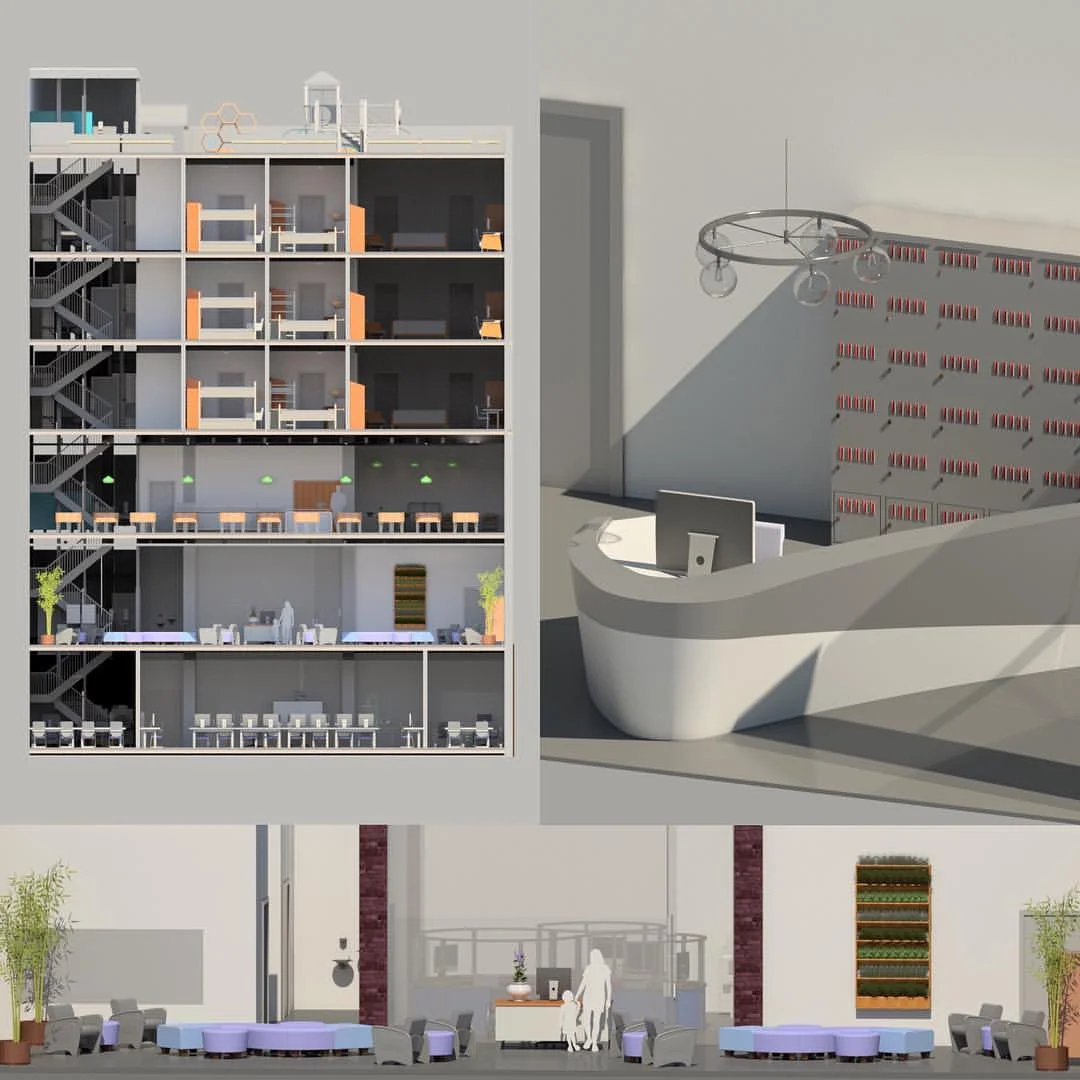
The first project under the #DesignTheHill banner was with Tacoma Housing Authority.
Methods:
Case Studies
Spaceworks Links to Opportunity
Project Manager - Michael Liang
Summer 2018

We started with an Anti-Racism Workshop with the design team to set a foundation with the team then moved into our research protocol.
Our questions were:
How do we take the cultural knowledge, experience, history, and hope for the future, and reflect that in the design?
How can we empower the Hilltop Community to design itself?

We held 4 homework groups with our core invested group figuring out community values and what our priorities should be moving forward. Elders came to share history of the black business district and they set a goal of 80% Black businesses in the space.

We held 3 design labs open to the general public where they worked with our design team to cultivate ideas, point out issues, create rapid prototypes, and provide space for venting past issues to heal relationships in the community.

We did community engagement projects focused on the subareas of youth, black-owned businesses, long-term well-connected Hilltop residents, the ESL community, and elders.

Insights:
Through this process, we learned that we could not work with absolutes, the community was more empathetic than we ever thought possible, and our timelines would always have to be adjustable. We developed a design guideline with the community outlining their priorities and goals for the future.

Design Guideline Summary:
Design Process Priorities:
Invite Diverse Co-Creators
Building humility and empathy.
Acknowledging and dismantling power constructs
Defining and assessing community needs
Co-Create with the community
Community Values:
Equity in Housing
Togetherness
Community Vitality
Environmental Justice
Mitigating Displacement
Community Gathering
Support for Local Economy
Art and Culture
Spaces to Relax and Rest
Healthy Environment
Access to Healthy Food
A desire for more greenery
Ownership in the community -> Safety
Impact:
By using community engagement and co-creation processes, the project fostered collaborative relationships between community members, decision-makers, and other stakeholders. It built trust and understanding between different groups, leading to more effective and sustainable solutions. The design guideline developed through this project serves as a roadmap for decision-makers, ensuring that future development projects within the Hilltop community are guided by the community's priorities and values. The project empowered the Hilltop community to design itself, ensuring that the community's voices are heard and taken into account in the decision-making process. As a result, the project has been able to create a stronger, more resilient, and more equitable Hilltop community. The first leg of the project provided an excellent foundation for the second stage of the project.
Lessons Learned:
Through the first #DesignTheHill project, we learned the importance of paying our homework group and meeting with them extensively before the design process begins. By paying our homework group, we would be able to recognize and value their time, expertise, and contributions to the project. This would also ensure that community members who were typically excluded from decision-making processes due to financial barriers were able to participate and have their voices heard. Additionally, meeting with the homework group extensively before the design process began would allow us to build relationships with them, understand their needs and priorities, and incorporate their feedback into the areas of the design process the community most focused on in the design labs. By doing so, we would be able to create a more collaborative and equitable design process, resulting in outcomes that better reflect the needs and values of the Hilltop community. This insight was crucial for the success of the next stage of #DesignTheHill and informed our approach to community engagement and co-creation in future projects.
Forterra
Going into the Forterra project, we used the same methods but altered our practices based on the insights from the THA process. Midway through the process, COVID hit and we were required to alter our plans. The Forterra project involved temporarily activating a long-neglected space and developing attainable and affordable condos in a quickly gentrifying neighborhood.
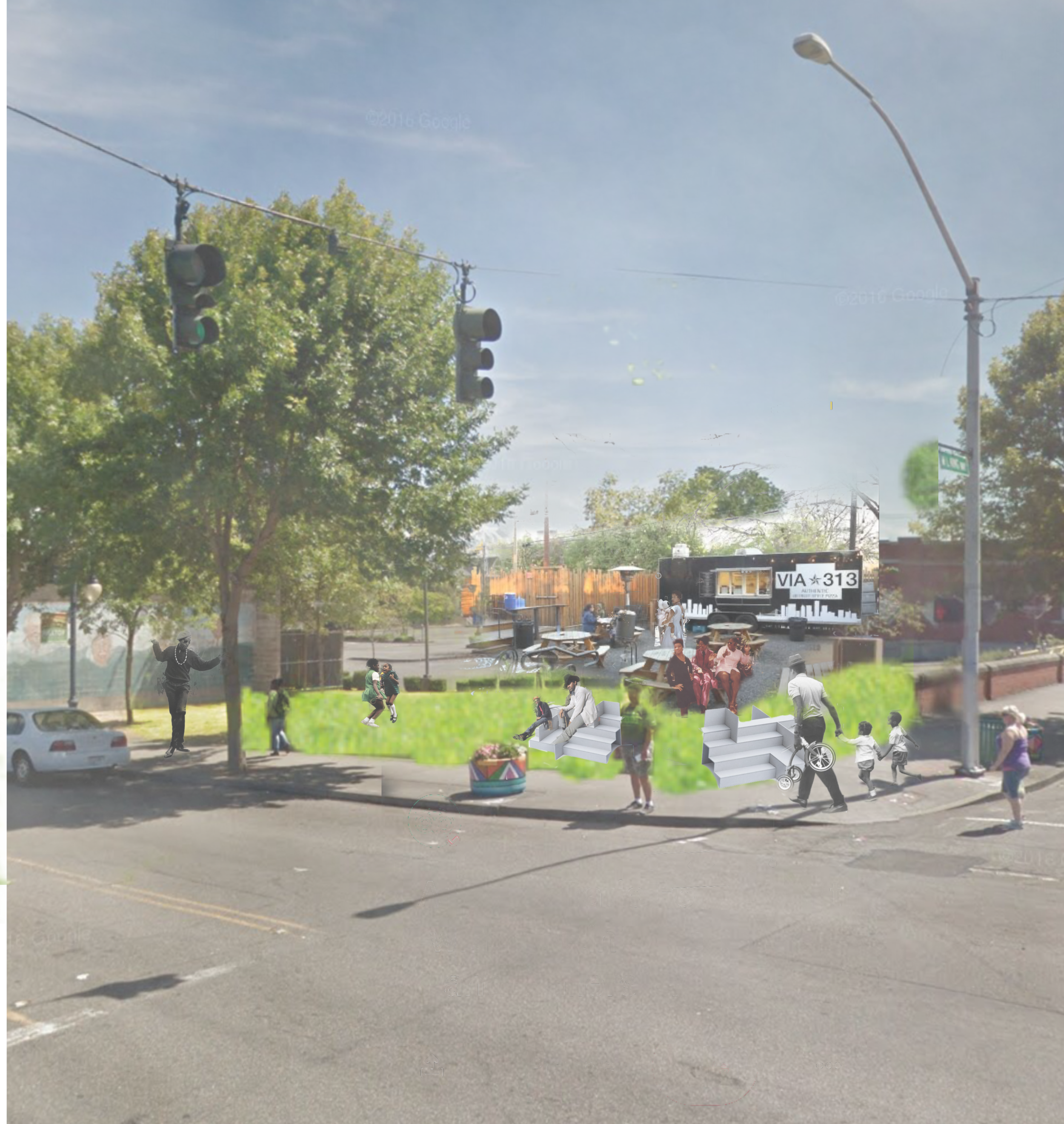
Rite Aid Before Temporary Activation


After:

Impacts:
Lessons Learned:
The #DesignTheHill project taught us important lessons about the design and development process. We learned that in a quickly changing landscape, simply adding more housing units may not be enough to create lasting and meaningful change. Instead, the placement and design of these units, in combination with an overall focus on community viability, has a broader impact than just the physical structures themselves. Through our engagement with the Hilltop community, we gained a deeper understanding of their needs and values and were able to incorporate them into the design process. By prioritizing equity, togetherness, community vitality, environmental justice, mitigating displacement, community gathering, and support for the local economy, we were able to create a vision for a stronger and more equitable community. The THA and Forterra projects, adding 231 and 300 units respectively, were only a small part of this vision, but their placement and design were critical to its success. By focusing on community viability and the broader impacts of development, we were able to create solutions that were responsive to the needs and values of the Hilltop community, leading to more equitable and sustainable outcomes.


Black in the City
The revitalization of traditionally Black communities looks at land as a commodity rather than a foundational piece to the story of its inhabitants. This revitalization often works to bring in outsiders and subsidize their visions rather than supporting and amplifying existing parts of the community’s social structure. This process ultimately erodes the social fabric of a neighborhood and drives up rent, displacing people from their homes and removing the communal aspects of living in the city from the neighborhood. Revitalizing a neighborhood equitably based on the cultural values and narrative surrounding the community will improve the health of that community without displacing long-time citizens. Revitalization should be about the overall health of the existing community members. This case study looked at regenerative placemaking nodes within Tacoma’s traditionally Black Hilltop neighborhood. The neighborhood is currently grappling with issues of displacement after decades of disinvestment from the area. The case study found that placemaking efforts largely happen in silos and finding a way to work together to convey community priorities to local government proves challenging as there are no existing pathways to easily facilitate that conversation. Moving forward, working together to create pathways towards conversation with city government, quantifying communal results to facilitate organizational growth, and figuring out who has the organizational capacity to do the work is what will ultimately lead towards policy change and equitable revitalization.


Radically Reimagining Landscape Architecture as Liberatory Praxis
Radically re-imagining landscape architecture serves as a conceptual and methodological foundation for the rest of this resource. Here, radical, from the word radix meaning "root," facilitates an analysis of the past to uncover the root of landscape architecture while re-imagination takes the information gleaned and builds toward a reconfiguration for the future to better align its practices with its goals. This re-imagining requires embracing the political dimensions of design and the tradition of oral storytelling in the margin in order to utilize design as an active tool for the facilitation of spatial justice. Ground In this framework, ground considers not only the physicality of landscape projects, but also the reciprocal ecologies between people in the margin and the margin itself and different ways of understanding the interplay between layered and interconnected elements of the community. Ground serves as an archival construction for understanding the symbolic, political, social, cultural, and communal realities of the past and possibilities of the future. It aims to recognize and acknowledge the uneven landscapes of power responsible for creating marginality in landscapes and ways to responsibly navigate within that marginality moving forward. The (Re)Creation of Knowledge The (re)creation of knowledge unpacks the way that we learn about, research, and collaboratively reflect on narrative threads of community. The process acknowledges the biases present in prevalent information about communities in the margin and the process of gathering that information, communicates with communities to gain a more comprehensive understanding of their multi-storied reality, and aims to guide the design process based upon this new reciprocal relationship.

For the most up-to-date look at what I have been researching, check out my ResearchGate.